Books & Publications
|
Chemical Magic 
by Leonard A. Ford


For many years, Leonard A. Ford, formerly Chairman of the Division of Science and Mathematics at Mankato State College, Minnesota, devised "chemical magic" shows for a series of college science fairs. In response to many requests, he compiled a volume of over 100 novel demonstrations from those shows. The book soon became one of the most widely used manuals in the field. Its tricks, mystifying and often spectacular, were designed not only to amuse and entertain an audience but to stimulate an interest in scientific principles. This book describes chemical experiments that give visible and
surprising results suitable for stage demonstrations. Presented as recipes with short descriptions of of underlying mechanisms (usually). What will catch your eye will be the number of classic demonstrations common in older books but now largely dropped from children's texts as too dangerous because of the ingredients required, or fumes and energy released.
Many of the recipes are about burning or blowing up things (Yeah! ;-)
128pages | Chemical Magic:
$10.00 | |
|

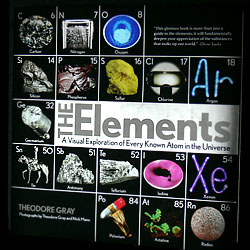
The Elements
An Exploration of Every Known Atom in the Universe
by Theodore Gray

 
An eye-opening, original collection of gorgeous, never-before-seen photographic representations of the 118 elements in the periodic table.
The elements are what we, and everything around us, are made of. But how many elements has anyone actually seen in pure, uncombined form?
The Elements provides this rare opportunity. Based on five years of research and photography, the pictures in this book make up the most complete, and visually arresting, representation available to the naked eye of every atom in the universe. Organized in order of appearance on the periodic table, each element is represented by a spread that includes a stunning, full-page, full-color photograph that most closely represents it in its purest form. For example, at -183°C, oxygen turns from a colorless gas to a beautiful pale blue liquid.
Also included are fascinating facts, figures, and stories of the elements as well as data on the properties of each, including atomic weight, density, melting and boiling point, valence, electronegativity, and the year and location in which it was discovered. Several additional photographs show each element in slightly altered forms or as used in various practical ways. The element's position on the periodic table is pinpointed on a mini rendering of the table and an illustrated scale of the element's boiling and/or melting points appears on each page along with a density scale that runs along the bottom.
Packed with interesting information, this combination of solid science and stunning artistic photographs is the perfect gift book for every sentient creature in the universe.
128pages | "The Elements" Book:
$30.00 | |
| | 
Muscle Wires
A Hands-on Guide to Robotic Muscles
by Roger
C. Gilbertson
|
If
you have a passion for light weight robot muscle, then this is the book
for you! It is a unique gem in the world of Muscle Wire. With
complete reference to designing, building, testing, operating dozens of
electronic circuits and electro-mechanical devices, how could anyone
pass this book up? Muscle Wires will show you the do's and
don'ts of designing and powering your own devices.
This book also offers all the
facts about muscle wires. You will be able to study their uses in
industrial, medical and aerospace applications, heat engines, robotics,
prosthetic limbs and much, much more. From the information this
book gives you, you will be able to develop your own projects such
as:
-Model Railroads
-Projects for Science Fairs
-Custom Electronic Devices
-Animated Models
-Radio Control Vehicles
-Computer-Controlled Systems
-Ultra-Small Machines & Robots
This is a great book for students or for those who are just learning the
practical applications of Muscle wire. Much of the information is
intended to steer you away from the common mistakes made by
novices. It doesn't' matter if you use pre-assembled electronics
or create your own, you will refer to this book again and again.
128pages | Muscle Wires Project Book:
$20.00 | |
| |
Introduction
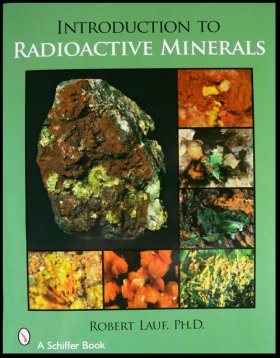
to Radioactive Minerals
by
Robert Lauf, Ph. D.


With nearly 200 illustrious color
photos and electron micrographs this book is a must for anyone
interested in Uranium and Thorium. The minerals are arranged
geographically and by the conditions which created the radioactive
elements. Then they are arranged into four broad sections which include:
primary minerals, secondary minerals, other minerals containing
essential uranium or thorium and minerals that may contain uranium or
thorium as significant impurities.
The author, Robert Lauf, Ph D, has worked over twenty years at Oak Ridge
National Laboratory where he conducted research on topics like material
synthesis, biomineralization, coal by-products, and nuclear fuel.
He also has been granted over 40 U.S. patents for his inventions which
have become successful products.
The Introduction
to Radioactive Minerals is a great introduction to the world of uranium
and thorium for any serious student or collector.
144 pages | Introduction to
Radioactive Minerals:
$30.00 | |
| |
The
Ultimate Tesla Coil Design
and
Construction Guide
by Mitch Tilbury

|
The Ultimate Tesla
Coil Design and Construction Guide is the first book to explain both
design and construction of the Tesla coil in a comprehensive
manner. This book is full with over 200 detailed illustrations and
coverage of all operating theory and calculation methods for Tesla
coils.
This book also includes:
-Introduction to Coiling
-Designing a Spark Gap Tesla Coil
-Inductors and Air Core Transformers
-Capacitors
-Spark Gaps
-Using Computer Simulation to Verify Coil Design
-76 Hands on Worksheets
-Performance forecasts based on characteristics and calculations
-A Biography of Nikola Tesla
For an engineer that wants to make exacting calculations for
his/her first Tesla coil this book has all the mathematical legwork done
for you. This book would also be very useful as a supplement to
electrical engineering courses in helping the student understand
practical applications and how to perform SPICE analysis, one of the
staples of everyday electrical engineering.
About the Author:
Mitch Tilbury found himself graduating high school in 1975 and
leaving for boot camp in the U.S. Marine Corps. A twenty year military
career as an electronics technician and CH-46 helicopter crew chief in
the U.S. Navy brought him to retirement in 1998. He graduated Summa cum
Laude from Southern Illinois University in 1991. Mitch transitioned to
the space industry as a Reliability Engineer and Engineering Analyst
where he currently conducts worst case performance, electrical stress,
and failure modes and effects analyses, reliability predictions and a
host of engineering tasks which assist in spacecraft design.
413 pages | Ultimate Tesla Coil Design and
Construction Guide:
$33.00 | |
| |

Absinthe & Flamethrowers For those who like
danger!
by
William Gurstelle

Want
to add more excitement to your life? Of course, doesn't
everyone? It's time to bring out your inner MacGyver. This book is by one of our favorite authors,
William Gurstelle, who also wrote Backyard Ballistics
and Woosh
Boom Splat.. Absinthe & Flamethrowers is a must have for your
ballistic library!
This
daring combination of science, history, and DIY projects will show you
how. Written for smart risk takers, it explores why danger is good for
you and details the art of living dangerously. Risk takers are
more successful, more interesting individuals who lead more fulfilling
lives. Unlike watching an action movie or playing a video game,
real-life experience changes a person, and Gurstelle will help you
discover the true thrill of making black powder along with dozens of
other edgy activities.
All
of the projects from throwing knives, drinking absinthe, and eating
fugu to cracking a bull whip, learning bartitsu, and building a
flamethrower have short learning curves, are hands-on and
affordable, and demonstrate true but reasonable risk. With a
strong emphasis on safety, each potentially life-altering project
includes step-by-step directions, photographs, and illustrations along
with troubleshooting tips from experts in the field.
224 pages | Absinthe &
Flamethrowers:
$18.00 | |
| |
Backyard Ballistics
A great project book for things that go 'Boom' !
by William
Gurstelle
| A great 'boy's book'-
boys (and girls with similar interests) from 9 to 90 will get a bang out
of these projects. The author presents enough safety information to be
reasonable, and mixes in scientific explanations, a bit of math, and
interesting anecdotes that take us back into the history of ballistics.
But most of all, he presents details plans and parts lists (including
sources for hard to find parts) to build things that shoot up into the
air, things that go "BOOM," and other cool stuff like fire
kites.
Many of the projects described
here have been documented elsewhere, but most other sources of
information have little to say about safety, science, or history. Using
this book as a starting point could lead one to develop a truly
interesting ballistic arsenal indeed!!
Just from skimming through it you
can tell that a lot of thought and precaution went into it's
construction. Parents may be scared seeing a book like this in the hands
of their child, but don't be frightened. Most of the projects in here
are pretty innocuous and safety is paramount. The book and author STRESS
proper precautions and advise safety gear for any dangerous experiments.
If you have a kid who has been playing with fire, been showing an interest in explosives or such, then buy them this book and
do these projects with them! It will give kids a productive, educational
and supervised outlet for these curiosities and fascinations and will
give you a chance to teach them a bit about physics and further bond
with them. Some young pyros grow into arsonists, others grow into
firemen and physicists... you make the choice! Instead of punishing them
and trying to curb their interest in such things, channel this energy
into something positive.
Before we had homeland security
to worry about, this might have been a good source book for a science
fair. If you're in touch with your inner Goddard, von Braun, or just
love the idea of a tennis ball mortar ... then this is the book for you!
169 pages | Backyard Ballistics:
$18.00 | |
| |
Woosh
Boom Splat
Build
projects from Pulse Jets to Potato Cannons & beyond !
by William
Gurstelle
These are the
homemade machines that you’ve dreamed of building, from the
high-voltage Night Lighter 36 spud gun to the Jam Jar Jet, the
Marshmallow Shooter, and the Yagua Blowgun. Including detailed diagrams
and supply lists, Gurstelle’s simple, step-by-step instructions help
workshop warriors at any skill level achieve impressively powerful
results. With 'Whoosh Boom Splat,' you can build:
- The Jam Jar Jet—the simple pulse jet engine that roars
- The Elastic Zip Cannon—a membrane-powered shooter that packs a
wallop
- The Mechanical Toe—a bungee-powered kicking machine
- The Vortex Launcher—a projectile shooter that uses air bullets for
ammunition
- The Clothespin Snap Shooter—the PG-17 version of a clothespin gun
that fires fiery projectiles
- The Architronitol the steam-powered cannon conceived by Leonardo da
Vinci
And many more!
In addition to learning how to make these cool gadgets, you’ll find
sections packed with information on what makes each machine unique.
Gurstelle describes the machine’s historical origins as only he can:
with verve, fun, and the sort of quirky details his legions of fans
love. Whoosh Boom Splat is a must-have for every extreme tinkerer.
About the Author
William Gurstelle is the author of Adventures from the Technology
Underground, Backyard Ballistics, Building Bots, and The Art of the
Catapult. The number of hours he’s spent crafting fighting robots and
catapults instead of working at, say, his normal job (as an engineer)
is, in Bill’s own words “scary to contemplate, but it serves a
purpose.” When not building devices that make stuff go whoosh, boom,
and splat, Bill is a contributing editor at Make magazine and writes
frequently for Wired, The Rake, and several other national
magazines.
159 pages | Woosh Boom Splat:
$18.00 | |
| |
How To Photograph
an Atomic Bomb
Amazing
images and history of the Atomic Bomb
by Peter Kuran
|
Peter Kuran has been fascinated with the Atomic
Bomb and its photography. As he writes: "It wasn't until 1945 that
the sciences of photography would cross paths with the sciences of the
atom. For the next 17 years, still and motion picture photography would
combine with atomic physics to create imagery the world may never
witness again first hand."
In 1995 Kuran produced and directed "Trinity and
Beyond (The Atomic Bomb Movie)," a documentary of the history of
nuclear weapons development and testing. During his work on that
documentary, he met many of the photographers, and in 1999 he directed
another documentary "The Atomic Filmmakers: Behind the
Scenes". He has now written this book containing documents and
photographs relating to the history of US atomic weapons tests between
1945 and 1962. He also presents information about the photographers and
their techniques and equipment.
The book contains amazing photographs from some of the 300
atmospheric tests conducted by the US during that period. Kuran writes
that there were relatively few images and film clips of Trinity, the
first test explosion, and the combat use of atomic bombs at Hiroshima
and Nagasaki. The government was intent on perfecting nuclear bombs, and
"photography was the best way of being able to capture data".
For the 21-kiloton, Crossroads Baker detonation near Bikini
Atoll on July 24, 1946, special 100-foot towers were erected on the
island for photographers to get unobstructed views. One black-and-white
image captured on an 8-by-10-inch negative shows a ship standing on end
after the device, positioned 95 feet beneath seawater, erupted in a
plume that raised 1 million tons of water in a column 300 yards wide. A
cloud could be seen rising 6,000 feet up.
A year later, atomic bomb photography was assigned to the
Air Force's 4881st Motion Picture Squadron. The squadron, which later
was redesignated as the 1352nd Photographic Squadron, operated out of a
secret production facility in Hollywood, California, known as Lookout
Mountain Studios. The squadron photographed tests in the South Pacific,
and at the Nevada Test Site, 65 miles northwest of Las Vegas. Edgerton,
Germeshausen and Grier devised ultra-high-speed strobe techniques for
producing split-second images of nuclear fireballs erupting, which
allowed scientists to tailor their design of bombs.
I cannot adequately describe these photographs. You really
have to see them to understand their visual impact. But it is easy to
describe the unsettling familiarity people displayed while watching and
photographing these tests. Many of the photographs are visual proof;
here George Yoshitake puts the casual approach into words:
"One afternoon I was at Lookout Mountain right here in
Hollywood, and I got a call from a Woody Mark. He said `George, I need
you out here tomorrow for a special test.' I got there that night and he
said, `Tomorrow morning you're going to go out with five other guys and
you're going to be standing at ground zero.' I said, `Ground zero?' He
said. `Yeah, but the bomb's gonna go off 10,000 feet above you.' I said,
`Well, what kind of protective gear am I going to have?' He said `None.'
"I remember I had a baseball hat, so I wore that just
in case. He gave me a still camera, and two motion picture cameras.
These were 35mm Eyemos. I set up the two Eyemos, and had little trip
wires that I could trip with my foot starting about 5 seconds before the
blast. And the still camera, I also had a trip wire so that I could trip
it. I could get one exposure only. The five other guys were scientists
and they volunteered to be there. I wasn't a volunteer. I didn't find
out until I got there."
These are extraordinary images for the
reader and a great gift for anyone interested in the topic.
142 pages ( Hardcover ) | How To
Photograph An Atomic Bomb:
$39.00 | |
| |
The
Chemistry of
Powder & Explosives
by Tenney L. Davis
The
late Dr. Davis produced this book as part of the material used for
training his grad students in WWII about chemical engineering aspects of
explosives. However, the best part of the book is probably the section
on the history and development of explosives.
This is a book for all kinds of people
interested in explosive chemistry. This book is not only for the
advanced explosive expert, it's also written for the beginner who's
learning the basic characteristics of explosives . It provides us
readers with a well rounded selection of high explosives, including
dynamite, R.D.X, TNT, low explosives and propellants, primary
explosives, etc.
The book also contains a large chapter on
Pyrotechnics, it's history, and a wide variety of firework formulas
& their manufacturing technique.
512 pages | The
Chemistry of Powder & Explosives:
$35.00 | |
| |
The
Radioactive Boy Scout
by Ken Silverstein
Growing
up in suburban Detroit, David Hahn was fascinated by science, and his
basement experiments—building homemade fireworks, brewing moonshine,
and concocting his own self-tanning lotion—were more ambitious than
those of other boys. While working on his Atomic Energy badge for the
Boy Scouts, David's obsessive attention turned to nuclear energy.
Throwing caution to the wind, he plunged into a new project: building a
nuclear breeder reactor in his backyard garden shed.
In The Radioactive Boy Scout, veteran
journalist Ken Silverstein recreates the months of David's nuclear
quest. Posing as a physics professor, David solicited information on
reactor design from the U.S. government and from industry experts.
(Ironically, the Nuclear Regulatory Commission was his number one source
of information.) Scavenging antiques stores and junkyards for
old-fashioned smoke detectors and gas lanterns (both of which contain
small amounts of radioactive material) and following blueprints he found
in an outdated physics textbook, David cobbled together a crude device.
His unsanctioned and wholly unsupervised project finally sparked an
environmental catastrophe that caused the EPA to shut down his lab
and bury it at a radioactive dumpsite in Utah.
209 pages | The
Radioactive Boy Scout:
$25.00 | |
| |

Mad
Science
Experiments You
Can Do at Home but Probably Shouldn't
by Theodore Gray

Plain & simple -
you need to buy this book.
If you like to experiment & tinker or get goose bumps when you see
things explode, or dangerous chemicals reacting then this book
is for you. Theodore Gray has truly outdone himself producing a large
format book with colorful images of all those really cool experiments you've always wanted to do - but didn't want to risk doing.
The best book of its kind anywhere - we can only hope
Theo is planning a follow-up. Are you listening Theo?
In Mad
Science, Theodore Gray demonstrates scientific principles through
extreme experiments. He launches toy rockets using energy
released from Oreo cookies, ignites a phosphorus sun by suspending
half a gram of white phosphorus in a globe filled with pure oxygen,
whips up a batch of homemade nylon thread by linking the molecules of
hexamethylenediamine and sebacoyl chloride, and gets the party started
by adding 500 pounds of quicklime to water to create a homemade hot tub.
Every experiment is accompanied by full-color
photographs that give you the feel that you have a front-row seat to
the activity. Gray includes step-by-step instructions for nearly
every experiment with references on how to acquire supplies for the
experiments. Following all of the safety guidelines, readers can
re-create many of the book's 55 experiments.
Grey's writing is fresh, humorous, and makes the
science exciting and easy to understand. Mad Science is the
perfect book for anyone fascinated by all things electrical, chemical,
or explosive, and who loves a vicarious thrill.
|
239 pages | Theo Gray's
Mad Science:
$25.00 | |
|
|